Batteries and Storage

July 23, 2026
Arnab Bhattacharya is an Indian physicist and science communicator. He is a research professor at the Tata Institute of Fundamental Research, where he works in semiconductor optoelectronics. Since 2021, he has also served as director of the Homi Bhabha Centre for Science Education. Bhattacharya is an avid proponent of public engagement and science education. Since 2009, he has led and curated Chai and Why, a widely attended science café in Mumbai. In 2017, the Indian National Science Academy honored him with the Indira Gandhi Prize for the Popularization of Science, one of India’s most prestigious science awards, for his contributions to public science communication. In this wide-ranging and insightful InterDialogue, we explore interconnected questions surrounding science communication, education, and outreach in both Indian and global contexts. We also discuss Bhattacharya’s projects during the COVID-19 pandemic, when he helped create low-cost methods for decontaminating N95 masks for reuse by frontline responders. In addition, we talk about his research on nanomaterials and India’s potential for developing domestic industries centered on advanced technologies such as semiconductors, solar energy, and nuclear power. Beyond his scientific research and outreach work, we also touch on the importance of maintaining work-life balance, as well as Bhattacharya’s passion for Indian classical music, nature, and cooking. Timestamps 1:02 – Bhattacharya’s introduction to science and science communication 10:59 – Interventions in science communication in India 16:16 – Hands-on alternatives to theoretical learning 21:34 – Bhattacharya’s involvement in pandemic response in India 27:36 – Public health communication during the pandemic 33:09 – Problems facing public health and science communication in India 41:01 – Bhattacharya’s directorship of the Homi Bhabha Center for Science Education 45:04 – Impact of AI on science education in India 50:43 – Bhattacharya’s research on lighting technology 55:54 – India’s potential for a domestic semiconductor industry 1:00:57 –...
PXL_20260320_025913694.MP_
Arnab Bhattacharya
March 24, 2026
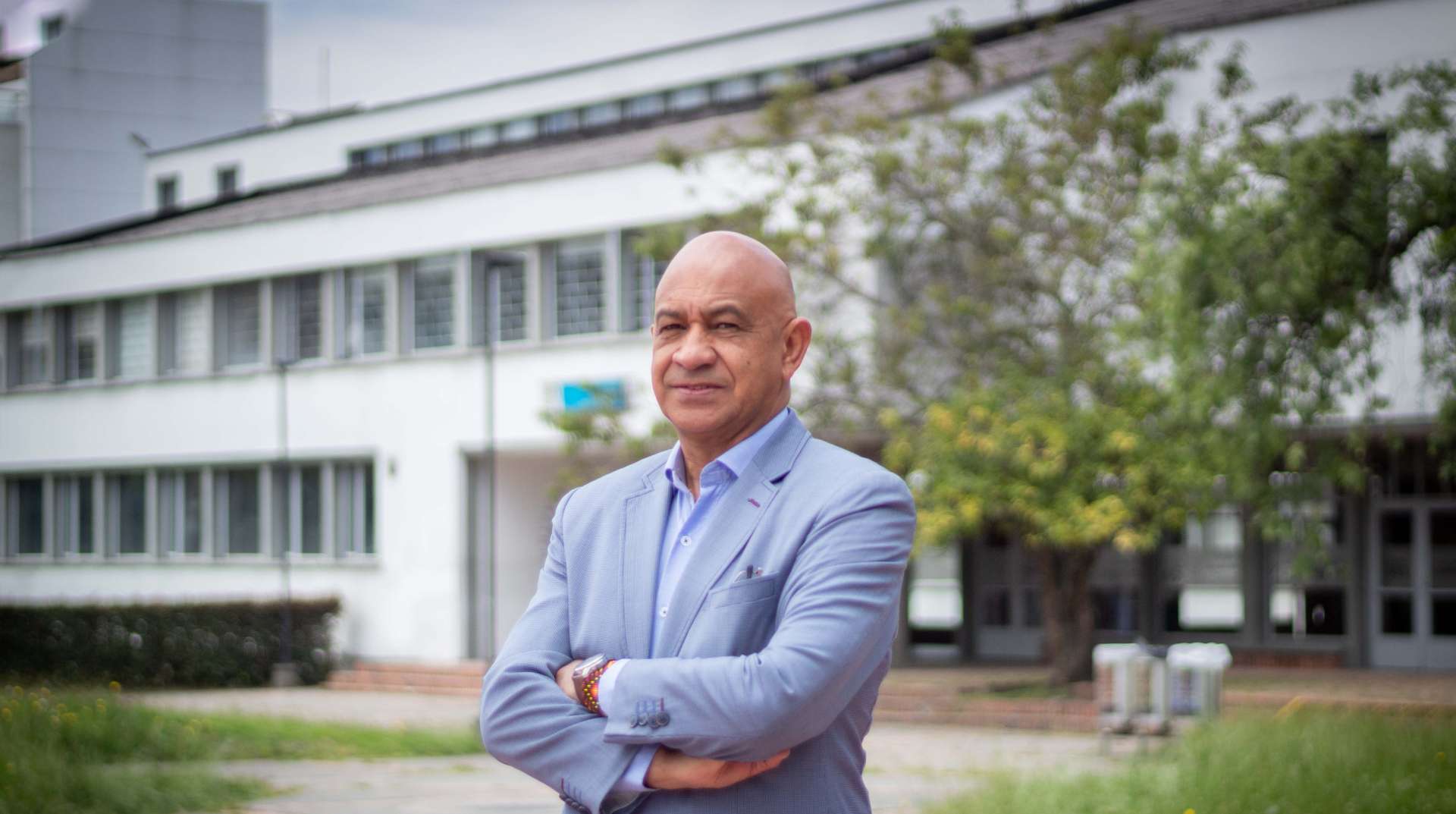
Omar Prias is an electrical engineer, professor at the National University of Colombia, and former president of the Colombian Energy and Gas Regulatory Commission (CREG). He has decades of experience in the energy sector working at the intersection between the academy, planning, and politics. This InterDialogue addresses the importance of decentralized energy technologies for sustainable development, the role of intercultural dialogue, national and global energy transition, and the possibilities of introducing advanced nuclear technologies, both new and projected, in non-nuclear countries such as Colombia. We begin by talking about the fundamental role of energy in all sectors of society. Timestamps 00:00 – Introduction 1:50 – Prias’s Background in Energy 7:57 – Industry and Energy Systems in Colombia 15:13 – Historical Development of the Energy Sector in Colombia; Energy and Conflict 22:06 – Geopolitics of Colombian Energy 26:32 – Hydroelectric Power in Colombia 44:40 – Intercultural Considerations and Energy Communities 53:15 – Intercultural Dialogue and Decision-Making 1:03:43 – Energy Transition in Colombia 1:13:41 – Nuclear Energy in Colombia 1:20:11 – Opening Spaces for Adopting New Technologies
Omar
Omar Prias
June 7, 2025
In a complex and rapidly evolving technological, socio-economic and geopolitical landscape that is focused on a global “sustainable energy transition,” increased electromobility based on lithium batteries is often stated as a key objective. However, unbeknownst to the public, policy makers and most researchers alike, lithium in its enriched isotopic forms (6Li and 7Li) holds tremendous added value beyond its use in batteries. This is especially true in both present and future nuclear technologies. For those countries with large lithium reserves that are being prospected for rapid lithium exploitation in order to fuel the growing global electromobility sector, it is important to be aware of these added value uses when considering plans for expanding lithium extraction (plans that also hold negative environmental externalities, such as prodigious water use and contamination). Argentina – which has an established nuclear energy and research sector, as well as a current administration that seems committed to rapidly depleting the national lithium reserves – serves as a strong and dynamic case study for the importance of crafting long-term, science-based and sustainable policies around the exploitation and isotopic separation of lithium. Argentina owns almost a third of the lithium reserves in South America which, together with those of Chile and Bolivia, represent more than half of the world’s lithium availability. Battery-grade lithium carbonate (Li2CO3) is produced from the Puna brines in the Andes of Northwestern Argentina – it is exported and only a small fraction remains in Argentina as royalties (around 3%) and the declared profits of the mining companies.  This article analyzes the use of lithium isotopes (6Li and 7Li) in fission and fusion nuclear reactors and in nuclear technology devices, such as scintillation plates, neutron detectors and shields. These uses of lithium in nuclear technologies have the potential to add value to Argentina’s limited lithium reserves...
corti
Horacio Corti
Contributors
June 4, 2025
Marcelino Sánchez Noé is an Indigenous leader and representative of the Ticuna People from the Colombian Amazon. He is the former general secretary and legal representative of the CIMTAR (Cabildo Indígena Mayor de Tarapacá) Association and has served as an Ethnoeducator in the Indigenous community of Caña Brava along the Cotuhue River, where he currently resides. This beautiful territory is deep in the Amazon Rainforest within the Putumayo River Basin, and near the border with Brazil. Since 2021 he has served as a senior advisor of the Greater Indigenous Council of Tarapacá and has participated in various intercultural collaborations with the Colombian State and with non-governmental organizations. His professional background is as a teacher and technician in comprehensive early childhood care, with a degree from SENA. In our Interdialogue we spoke about the beautiful culture and ancestral territory of the Tikuna, and how they have recently been roped into Colombia’s ongoing conflict, especially in relation to illegal gold mining. We then spoke about the central role of the “Chagra” (traditional rotational agriculture) for the Ticuna, and how circular bioeconomics focused on the Chagra and Non-timber forest products, as well as an appropriate integration of Western science and technology, can create sustainable livelihoods for the Ticuna. We also focused our conversation on the vital importance of autonomy and mutually respectful intercultural dialogue and collaborations, in order preserve both traditional cultures and the wider Andes-Amazon ecoregion. Note: This Interdialogue was recorded in Spanish and is subtitled in English. Timestamps 00:00:00 – Introduction 00:07:41 – Ancestral territory of the Ticuna and its place in Colombia’s ongoing conflict 00:11:53 – The importance of traditional knowledge, language and autonomous governance 00:16:52 – Bioeconomics, sustainable livelihoods and the central role of the “Chagra” 00:24:17 – Water, energy, communication, and the importance of weaving together science, technology...
Marcelino
Marcelino Sanchez Noe
March 14, 2025
Horacio Corti is an Argentinian physical chemist, a full professor at the University of Buenos Aires, and a researcher and long-time member of Argentina’s National Atomic Energy Commission.  Corti has researched a wide range of condensed matter and material physics phenomena over his long and productive career, from membranes and nanoscale microscopy, to applications of density functional theory and energy storage systems.  Much of his recent research has been focused on Lithium, both its extraction and isotopic separation, as well as its applications beyond batteries, especially within nuclear technologies.  Our interdialogue spanned a range of topics, though focused a good amount on the complex environmental, economic and geopolitical landscape around the lithium supply chain, and how lithium has tremendous added value within present and future nuclear technologies. 00:00 Argentina’s Nuclear Energy and Technology Development 02:00 The Status of Nuclear Power Reactors in Argentina 06:10 The Development of Small Modular Reactors in Argentina 09:24 Preserving Argentina’s Lithium Reserves for Nuclear Technologies 45:43 Beyond Batteries: Lithium-6 and Lithium-7 in Nuclear Technologies 47:05 Separation and Enrichment Methods for Producing Lithium-6 and Lithium-7 01:16:10 Geopolitics and Policy Decisions in Lithium Research
corti
Horacio Corti
March 7, 2025
Ernesto Julio Calvo is an Argentinian chemist and full research professor at the University of Buenos Aires, where he directs the Institute of Physical Chemistry of Materials, Environment and Energy. He is also a member of Argentina’s National Scientific and Technical Research Council (CONICET), a federal agency that coordinates scientific research. For the past several years Calvo’s research has focused on direct lithium extraction methods by electrochemical processes, with a geographical focus on the salt flats of northern Argentina, northern Chile and southern Bolivia, which is known as the “Lithium Triangle”. He has also helped to found LitiAR, a spin-off company focused on developing clean, sustainable and scalable direct electrochemical lithium extraction methods, to address growing demand for lithium batteries. In 2017 Calvo won the prestigious Bright Minds Challenge for his work on direct lithium extraction by electrochemical processes.  In our interdialogue, which was recorded during a visit to Calvo’s laboratory at the University of Buenos Aires, we covered a range of timely and important topics related to lithium extraction and the need for more efficient, scalable and sustainable ways of mining, refining and utilizing lithium within the socioeconomic context of an increasingly prominent global electromobility sector, and a geopolitical context that supports an energy transition away from fossil fuels.  The technology that Calvo and his team has invented and pioneered for lithium extraction, which is based on a direct electrochemical process using a flow-through reactor design, is now being used on the natural salt brines of the Argentinian Puna, with notable success, and it is one promising technology for direct lithium extraction that has the potential to be scaled up.  We began by speaking about the advancements in his research and its applications, since winning the Bright Minds Challenge in 2017. Timestamps 02:30 Introduction and Background 09:09 Progress since...
IMG_20240531_155716792
Ernesto Julio Calvo
Explore The InterPlex: Where Minds Unite, Worlds Connect!

Dive into a realm of interdisciplinary exploration. Join our community, break boundaries, and shape the future. Ready to connect?

Login

Sign up to get The InterPlex newsletter

Update Password

Update Password *
Confirm New Password *