Biomass

March 24, 2026
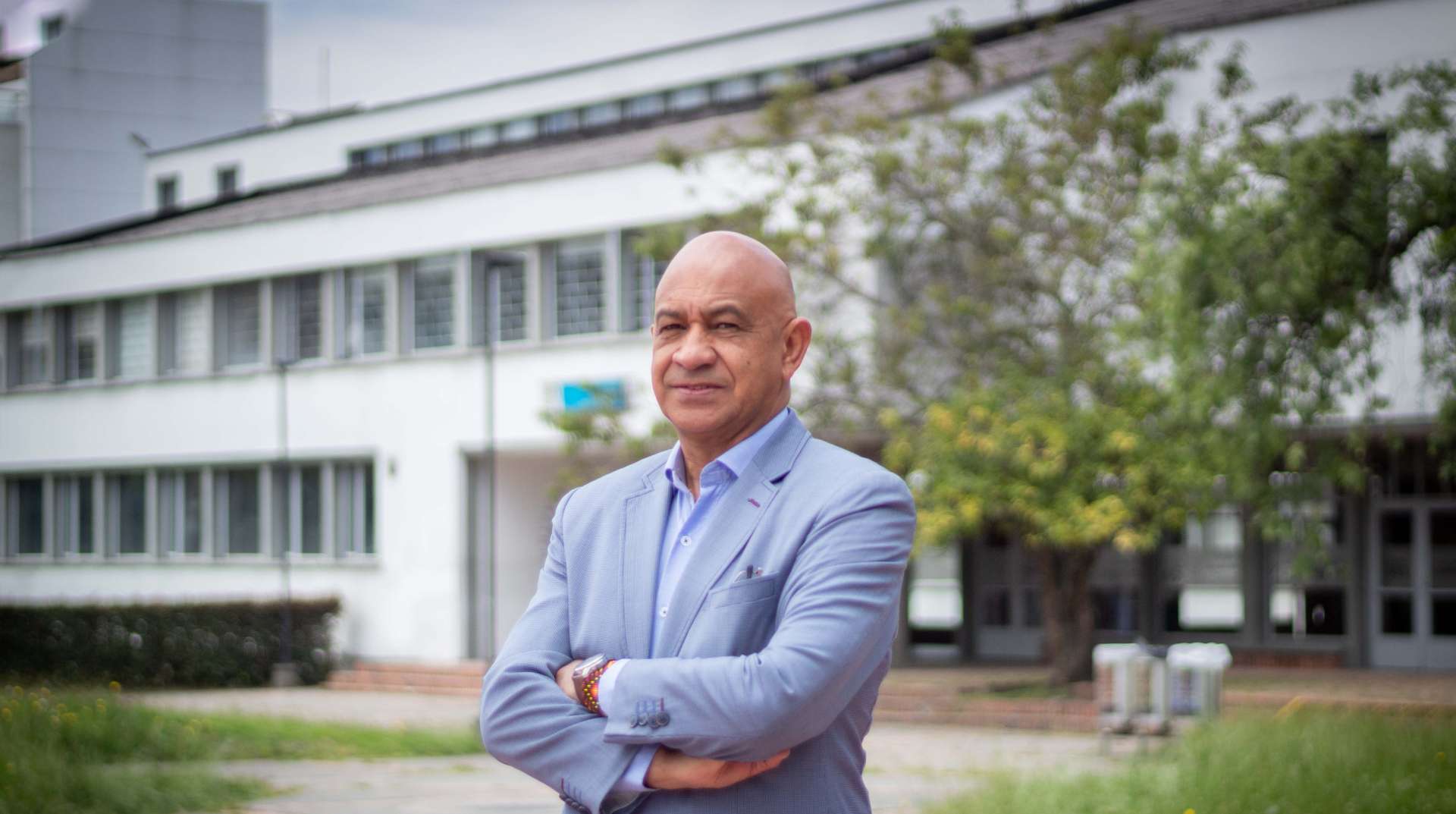
Omar Prias is an electrical engineer, professor at the National University of Colombia, and former president of the Colombian Energy and Gas Regulatory Commission (CREG). He has decades of experience in the energy sector working at the intersection between the academy, planning, and politics. This InterDialogue addresses the importance of decentralized energy technologies for sustainable development, the role of intercultural dialogue, national and global energy transition, and the possibilities of introducing advanced nuclear technologies, both new and projected, in non-nuclear countries such as Colombia. We begin by talking about the fundamental role of energy in all sectors of society. Timestamps 00:00 – Introduction 1:50 – Prias’s Background in Energy 7:57 – Industry and Energy Systems in Colombia 15:13 – Historical Development of the Energy Sector in Colombia; Energy and Conflict 22:06 – Geopolitics of Colombian Energy 26:32 – Hydroelectric Power in Colombia 44:40 – Intercultural Considerations and Energy Communities 53:15 – Intercultural Dialogue and Decision-Making 1:03:43 – Energy Transition in Colombia 1:13:41 – Nuclear Energy in Colombia 1:20:11 – Opening Spaces for Adopting New Technologies
Omar
Omar Prias
June 4, 2025
Marcelino Sánchez Noé is an Indigenous leader and representative of the Ticuna People from the Colombian Amazon. He is the former general secretary and legal representative of the CIMTAR (Cabildo Indígena Mayor de Tarapacá) Association and has served as an Ethnoeducator in the Indigenous community of Caña Brava along the Cotuhue River, where he currently resides. This beautiful territory is deep in the Amazon Rainforest within the Putumayo River Basin, and near the border with Brazil. Since 2021 he has served as a senior advisor of the Greater Indigenous Council of Tarapacá and has participated in various intercultural collaborations with the Colombian State and with non-governmental organizations. His professional background is as a teacher and technician in comprehensive early childhood care, with a degree from SENA. In our Interdialogue we spoke about the beautiful culture and ancestral territory of the Tikuna, and how they have recently been roped into Colombia’s ongoing conflict, especially in relation to illegal gold mining. We then spoke about the central role of the “Chagra” (traditional rotational agriculture) for the Ticuna, and how circular bioeconomics focused on the Chagra and Non-timber forest products, as well as an appropriate integration of Western science and technology, can create sustainable livelihoods for the Ticuna. We also focused our conversation on the vital importance of autonomy and mutually respectful intercultural dialogue and collaborations, in order preserve both traditional cultures and the wider Andes-Amazon ecoregion. Note: This Interdialogue was recorded in Spanish and is subtitled in English. Timestamps 00:00:00 – Introduction 00:07:41 – Ancestral territory of the Ticuna and its place in Colombia’s ongoing conflict 00:11:53 – The importance of traditional knowledge, language and autonomous governance 00:16:52 – Bioeconomics, sustainable livelihoods and the central role of the “Chagra” 00:24:17 – Water, energy, communication, and the importance of weaving together science, technology...
Marcelino
Marcelino Sanchez Noe
September 17, 2024
Strengthening the socio-ecological systems of Indigenous communities is of high priority for achieving global “sustainable development” and environmental goals.  For Indigenous people to remain resilient stewards of ecosystems and culture in the face of anticipated threats like climate change and territorial exploitation, they need access to reliable and affordable sources of decentralized “off-grid” clean energy.
DSC07445
Daniel Henryk Rasolt
Contributors
July 27, 2024
The longest running successful experiments in sustainable human land use are found within the collectively held lands of traditional communities, who have lived for generations in balance with the ecosystems of their ancestral territories. Looking to Indigenous socio-ecological system...
DSC07445
Daniel Henryk Rasolt
Contributors
December 18, 2023
Carlos Nobre is a prominent Brazilian Earth systems scientist and a professor at the Institute for Advanced Studies at the University of São Paulo. He has been calling attention to the global importance of, and threats to, the Amazon rainforest for decades, emphasizing the role of deforestation in climate change and the risk of reaching tipping points in the Amazon, where megadiverse forest will inevitably retreat into savannah. He spearheads the Amazonia 4.0 initiative, while also serving as co-chair of the interdisciplinary and transboundary Science Panel for the Amazon. We had an enlightening InterDialogue in late 2022 focused on his vision for establishing an Amazonia Institute of Technology, and how he believes the Amazon can be sustainably developed into a standing-forest flowing-river bioeconomy. We spoke about the importance of weaving together traditional Indigenous knowledge with technology and modern science, the Science Panel for the Amazon, and the role of decentralized energy in the Amazon, and also about the urgency of fostering evidence-based policy and better science communication. Chapters 00:00 – Introduction 01:25 – The Vision for a Standing Forest Bioeconomy for the Amazon 03:20 – The Importance of Biodiversity 05:16 – Sustainable Infrastructure and the Urban Amazon 09:41 – Merging Traditional Knowledge with Modern Science 25:05 – Renewable Energy for Sustainable Development 35:23 – The Future of Mega Dams in the Amazon 47:45 – The Science Panel for the Amazon
Nobre
Carlos Nobre
Explore The InterPlex: Where Minds Unite, Worlds Connect!

Dive into a realm of interdisciplinary exploration. Join our community, break boundaries, and shape the future. Ready to connect?

Login

Sign up to get The InterPlex newsletter

Update Password

Update Password *
Confirm New Password *