Hydrogen

March 24, 2026
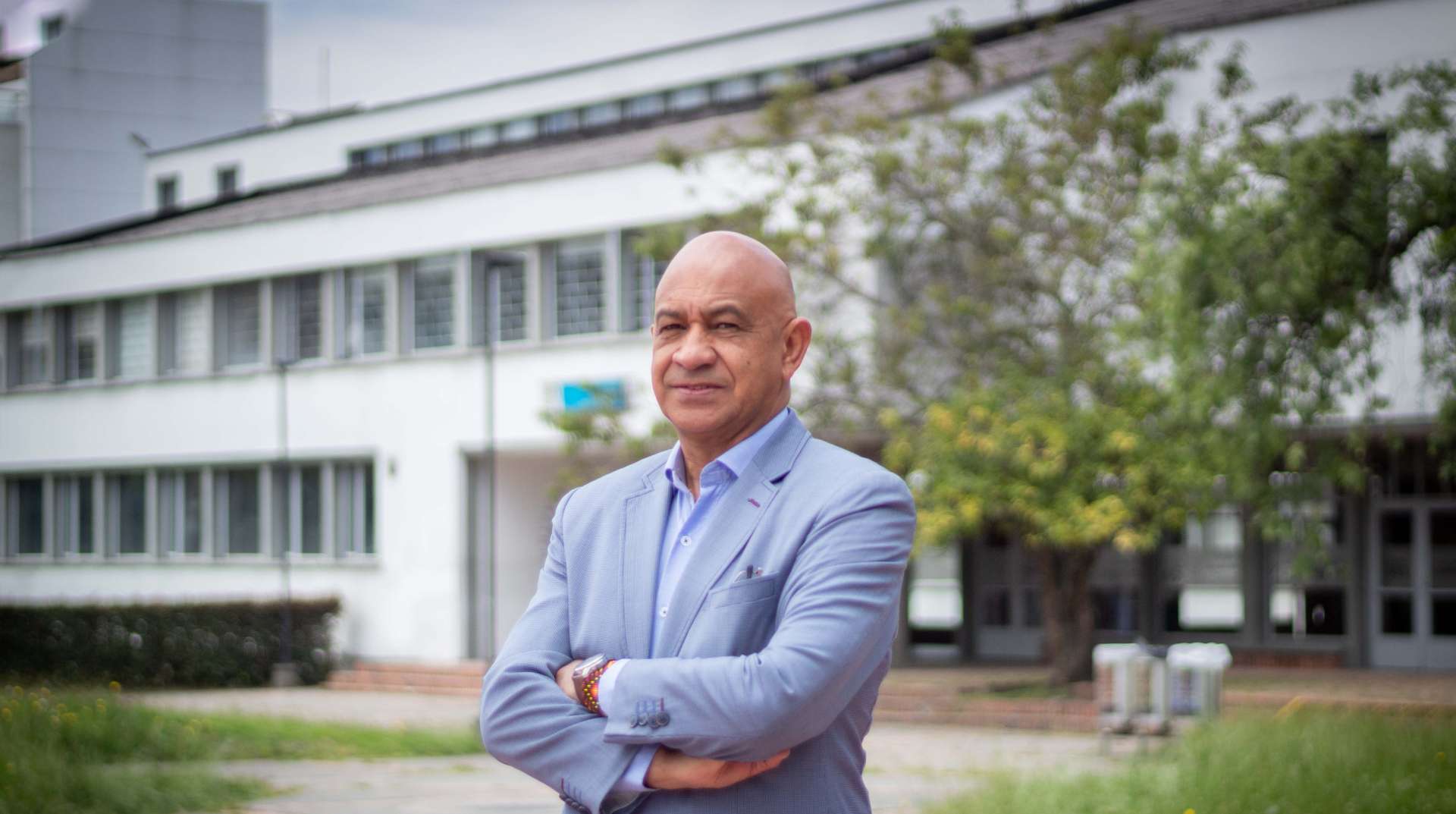
Omar Prias is an electrical engineer, professor at the National University of Colombia, and former president of the Colombian Energy and Gas Regulatory Commission (CREG). He has decades of experience in the energy sector working at the intersection between the academy, planning, and politics. This InterDialogue addresses the importance of decentralized energy technologies for sustainable development, the role of intercultural dialogue, national and global energy transition, and the possibilities of introducing advanced nuclear technologies, both new and projected, in non-nuclear countries such as Colombia. We begin by talking about the fundamental role of energy in all sectors of society. Timestamps 00:00 – Introduction 1:50 – Prias’s Background in Energy 7:57 – Industry and Energy Systems in Colombia 15:13 – Historical Development of the Energy Sector in Colombia; Energy and Conflict 22:06 – Geopolitics of Colombian Energy 26:32 – Hydroelectric Power in Colombia 44:40 – Intercultural Considerations and Energy Communities 53:15 – Intercultural Dialogue and Decision-Making 1:03:43 – Energy Transition in Colombia 1:13:41 – Nuclear Energy in Colombia 1:20:11 – Opening Spaces for Adopting New Technologies
Omar
Omar Prias
March 14, 2025
Horacio Corti is an Argentinian physical chemist, a full professor at the University of Buenos Aires, and a researcher and long-time member of Argentina’s National Atomic Energy Commission.  Corti has researched a wide range of condensed matter and material physics phenomena over his long and productive career, from membranes and nanoscale microscopy, to applications of density functional theory and energy storage systems.  Much of his recent research has been focused on Lithium, both its extraction and isotopic separation, as well as its applications beyond batteries, especially within nuclear technologies.  Our interdialogue spanned a range of topics, though focused a good amount on the complex environmental, economic and geopolitical landscape around the lithium supply chain, and how lithium has tremendous added value within present and future nuclear technologies. 00:00 Argentina’s Nuclear Energy and Technology Development 02:00 The Status of Nuclear Power Reactors in Argentina 06:10 The Development of Small Modular Reactors in Argentina 09:24 Preserving Argentina’s Lithium Reserves for Nuclear Technologies 45:43 Beyond Batteries: Lithium-6 and Lithium-7 in Nuclear Technologies 47:05 Separation and Enrichment Methods for Producing Lithium-6 and Lithium-7 01:16:10 Geopolitics and Policy Decisions in Lithium Research
corti
Horacio Corti
March 7, 2025
Ernesto Julio Calvo is an Argentinian chemist and full research professor at the University of Buenos Aires, where he directs the Institute of Physical Chemistry of Materials, Environment and Energy. He is also a member of Argentina’s National Scientific and Technical Research Council (CONICET), a federal agency that coordinates scientific research. For the past several years Calvo’s research has focused on direct lithium extraction methods by electrochemical processes, with a geographical focus on the salt flats of northern Argentina, northern Chile and southern Bolivia, which is known as the “Lithium Triangle”. He has also helped to found LitiAR, a spin-off company focused on developing clean, sustainable and scalable direct electrochemical lithium extraction methods, to address growing demand for lithium batteries. In 2017 Calvo won the prestigious Bright Minds Challenge for his work on direct lithium extraction by electrochemical processes.  In our interdialogue, which was recorded during a visit to Calvo’s laboratory at the University of Buenos Aires, we covered a range of timely and important topics related to lithium extraction and the need for more efficient, scalable and sustainable ways of mining, refining and utilizing lithium within the socioeconomic context of an increasingly prominent global electromobility sector, and a geopolitical context that supports an energy transition away from fossil fuels.  The technology that Calvo and his team has invented and pioneered for lithium extraction, which is based on a direct electrochemical process using a flow-through reactor design, is now being used on the natural salt brines of the Argentinian Puna, with notable success, and it is one promising technology for direct lithium extraction that has the potential to be scaled up.  We began by speaking about the advancements in his research and its applications, since winning the Bright Minds Challenge in 2017. Timestamps 02:30 Introduction and Background 09:09 Progress since...
IMG_20240531_155716792
Ernesto Julio Calvo
September 17, 2024
Strengthening the socio-ecological systems of Indigenous communities is of high priority for achieving global “sustainable development” and environmental goals.  For Indigenous people to remain resilient stewards of ecosystems and culture in the face of anticipated threats like climate change and territorial exploitation, they need access to reliable and affordable sources of decentralized “off-grid” clean energy.
DSC07445
Daniel Henryk Rasolt
Contributors
December 18, 2023
Carlos Nobre is a prominent Brazilian Earth systems scientist and a professor at the Institute for Advanced Studies at the University of São Paulo. He has been calling attention to the global importance of, and threats to, the Amazon rainforest for decades, emphasizing the role of deforestation in climate change and the risk of reaching tipping points in the Amazon, where megadiverse forest will inevitably retreat into savannah. He spearheads the Amazonia 4.0 initiative, while also serving as co-chair of the interdisciplinary and transboundary Science Panel for the Amazon. We had an enlightening InterDialogue in late 2022 focused on his vision for establishing an Amazonia Institute of Technology, and how he believes the Amazon can be sustainably developed into a standing-forest flowing-river bioeconomy. We spoke about the importance of weaving together traditional Indigenous knowledge with technology and modern science, the Science Panel for the Amazon, and the role of decentralized energy in the Amazon, and also about the urgency of fostering evidence-based policy and better science communication. Chapters 00:00 – Introduction 01:25 – The Vision for a Standing Forest Bioeconomy for the Amazon 03:20 – The Importance of Biodiversity 05:16 – Sustainable Infrastructure and the Urban Amazon 09:41 – Merging Traditional Knowledge with Modern Science 25:05 – Renewable Energy for Sustainable Development 35:23 – The Future of Mega Dams in the Amazon 47:45 – The Science Panel for the Amazon
Nobre
Carlos Nobre
Explore The InterPlex: Where Minds Unite, Worlds Connect!

Dive into a realm of interdisciplinary exploration. Join our community, break boundaries, and shape the future. Ready to connect?

Login

Sign up to get The InterPlex newsletter

Update Password

Update Password *
Confirm New Password *