Mass and Energy

July 23, 2026
Arnab Bhattacharya is an Indian physicist and science communicator. He is a research professor at the Tata Institute of Fundamental Research, where he works in semiconductor optoelectronics. Since 2021, he has also served as director of the Homi Bhabha Centre for Science Education. Bhattacharya is an avid proponent of public engagement and science education. Since 2009, he has led and curated Chai and Why, a widely attended science café in Mumbai. In 2017, the Indian National Science Academy honored him with the Indira Gandhi Prize for the Popularization of Science, one of India’s most prestigious science awards, for his contributions to public science communication. In this wide-ranging and insightful InterDialogue, we explore interconnected questions surrounding science communication, education, and outreach in both Indian and global contexts. We also discuss Bhattacharya’s projects during the COVID-19 pandemic, when he helped create low-cost methods for decontaminating N95 masks for reuse by frontline responders. In addition, we talk about his research on nanomaterials and India’s potential for developing domestic industries centered on advanced technologies such as semiconductors, solar energy, and nuclear power. Beyond his scientific research and outreach work, we also touch on the importance of maintaining work-life balance, as well as Bhattacharya’s passion for Indian classical music, nature, and cooking. Timestamps 1:02 – Bhattacharya’s introduction to science and science communication 10:59 – Interventions in science communication in India 16:16 – Hands-on alternatives to theoretical learning 21:34 – Bhattacharya’s involvement in pandemic response in India 27:36 – Public health communication during the pandemic 33:09 – Problems facing public health and science communication in India 41:01 – Bhattacharya’s directorship of the Homi Bhabha Center for Science Education 45:04 – Impact of AI on science education in India 50:43 – Bhattacharya’s research on lighting technology 55:54 – India’s potential for a domestic semiconductor industry 1:00:57 –...
PXL_20260320_025913694.MP_
Arnab Bhattacharya
July 16, 2026
Earth’s Memory, Part One Abstract Every rock carries a fragment of Earth’s memory. Collectively, these fragments preserve an extraordinary geological record spanning more than 4.5 billion years of planetary evolution. This article traces that record through the deep-time history of our planet—from the formation of Earth’s earliest crust and the Great Oxidation Event, when microbial life transformed the planet’s atmosphere, to the five great mass extinctions that repeatedly reset the trajectory of life, and the Snowball Earth episodes, when our planet experienced its most extreme glaciation. Drawing on more than two decades of fieldwork across Himalaya and Peninsular India, among ancient rocks, minerals, and fossils that bear direct witness to these planetary transformations, it explores how geologists reconstruct Earth’s early history from evidence preserved in the geological archives. Taken together, these geological events reveal a recurring pattern: Earth is a dynamic system in which every major crisis has also created the conditions for new and often more complex forms of life to evolve. That pattern, written into rocks billions of years old, continues to shape the planet today.    I first learned to listen to rocks long before I had the words to describe what that meant.  It began in the Himalaya, the youngest mountain range on Earth, still rising, still deforming, and still recording the ongoing collision between continents. During my early fieldwork, I spent long days mapping folded strata, tracing fault scarps, and trying to understand how landscapes preserve evidence of processes operating across vastly different geological timescales. At that time, I often felt that the mountains were trying to say something in a language I had not yet learned. Over time, through fieldwork, mapping, and countless hours spent among rocks and sediments, I began to decipher that silent language.  The lesson deepened across many other landscapes of India....
Jai
Jaishri Sanwal Bhatt
Contributors
April 24, 2026
Sunil Mukhi is an Indian theoretical physicist at the Indian Institute of Science Education and Research (IISER) in Pune, Maharashtra. Mukhi has led a distinguished career in theoretical particle physics. He received his PhD from Stony Brook University before joining the prestigious Tata Institute of Fundamental Research in Mumbai, where he worked for 27 years. In 2012, he joined IISER Pune as chair of the physics department, where he is now an honorary emeritus professor and the Raja Ramanna Chair. Throughout the years, Mukhi has held sabbatical positions at CERN in Geneva, the Institute for Advanced Study at Princeton University, and Trinity College at the University of Cambridge. He is a fellow of the Indian Academy of Sciences, the Indian National Science Academy, and the World Academy of Sciences. In 1999, he received the Shanti Swarup Bhatnagar Prize, one of India’s highest science awards, for his contributions to theoretical physics. In this InterDialogue, we begin by speaking about Mukhi’s advisory work on academic ethics, the structural incentives for academic misconduct, his concerns about AI use in academia and the difficulties of curtailing it, and India’s international scientific standing. We then speak about Mukhi’s research and contributions to theoretical physics, especially in the field of string theory. Mukhi also discusses his personal background, his career trajectory, and his reasons for returning to India after studying in the United States. We conclude by addressing the importance of science outreach, inclusivity in science, responsible behavior in scientific and public discourse, and the importance of extracurricular interests to maintaining a healthy work-life balance. Timestamps 00:00 – Introduction 2:27 – Importance of academic ethics 5:59 – Consequences of academic misconduct 8:24 – Structural incentives for academic misconduct 11:23 – Legal challenges in academic ethics 13:14 – AI and academic ethics 16:46 – Addressing AI use...
Mukhi
Sunil Mukhi
March 24, 2026
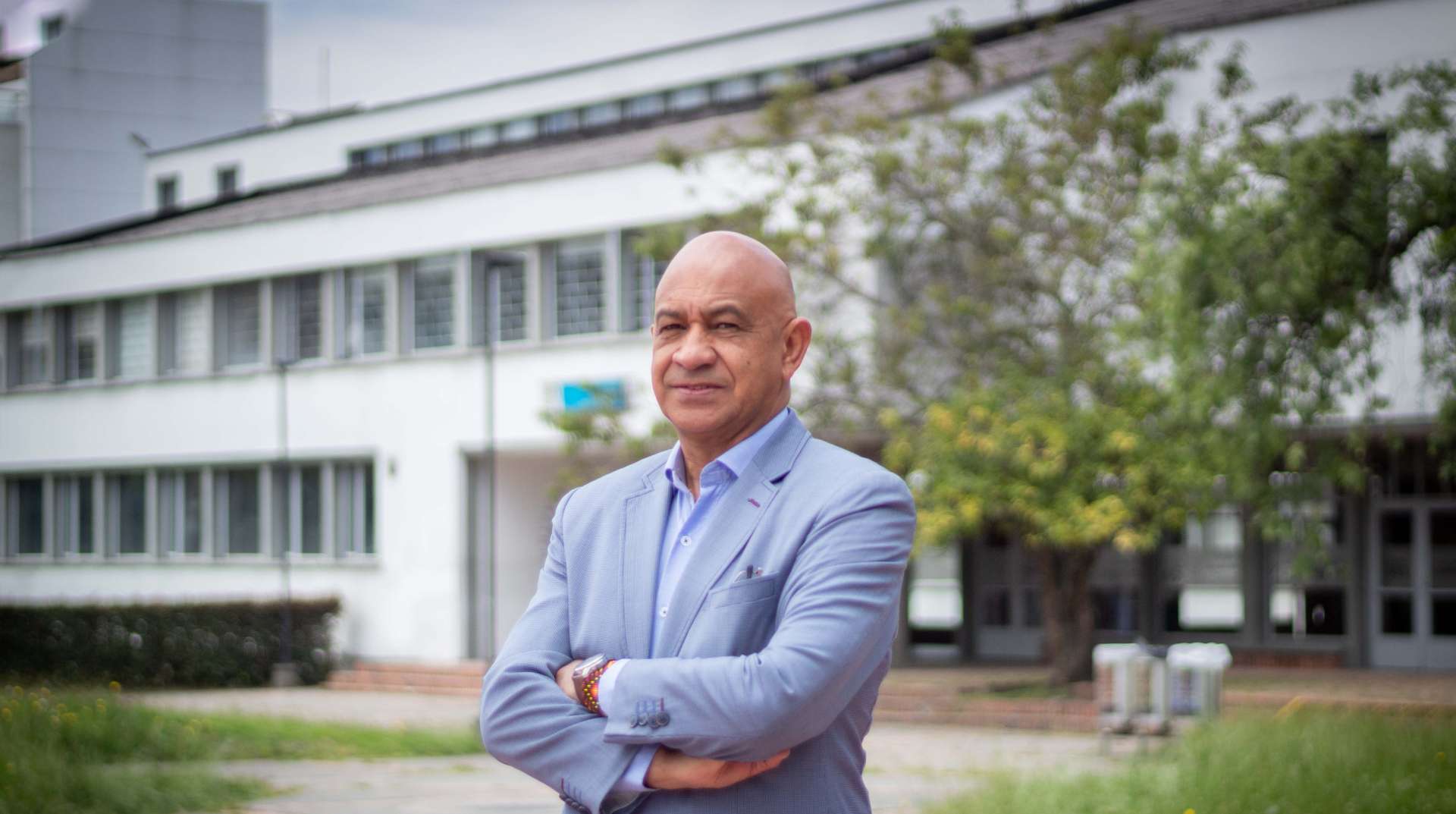
Omar Prias is an electrical engineer, professor at the National University of Colombia, and former president of the Colombian Energy and Gas Regulatory Commission (CREG). He has decades of experience in the energy sector working at the intersection between the academy, planning, and politics. This InterDialogue addresses the importance of decentralized energy technologies for sustainable development, the role of intercultural dialogue, national and global energy transition, and the possibilities of introducing advanced nuclear technologies, both new and projected, in non-nuclear countries such as Colombia. We begin by talking about the fundamental role of energy in all sectors of society. Timestamps 00:00 – Introduction 1:50 – Prias’s Background in Energy 7:57 – Industry and Energy Systems in Colombia 15:13 – Historical Development of the Energy Sector in Colombia; Energy and Conflict 22:06 – Geopolitics of Colombian Energy 26:32 – Hydroelectric Power in Colombia 44:40 – Intercultural Considerations and Energy Communities 53:15 – Intercultural Dialogue and Decision-Making 1:03:43 – Energy Transition in Colombia 1:13:41 – Nuclear Energy in Colombia 1:20:11 – Opening Spaces for Adopting New Technologies
Omar
Omar Prias
November 23, 2025
In this InterDialogue recorded at the 17th General Conference of the World Academy of Sciences (TWAS) in October 2025, The InterPlex founder Daniel Henryk Rasolt speaks with Brazilian physicist Marcelo Knobel about his background and career trajectory, science communication, the importance of TWAS, his tenure as the Executive Director of TWAS, the current state of science in Brazil, issues of brain drain, and his own research projects, among other timely topics. In addition to serving as the current Executive Director of TWAS, Knobel is the former rector of the University of Campinas, where he fostered interdisciplinary collaborations and innovative education programs. He has also done research on what he calls “effective communication” between higher education institutions and the public, while practicing what he preaches by disseminating articles, opinion pieces, books, and a podcast intended for a non-specialized audience. He is a global leader in science communication, international and interinstitutional collaborations, and science development in the Global South. Chapters 0:00 – Introduction 2:13 – Knobel’s Background and Career Trajectory 5:37 – Scientific Censorship in Argentina under the Dictatorship 7:57 – Importance of Effective Science Communication 11:58 – Lessons from Knobel’s Science Communication Experience 14:52 – Communicating Nuance and Adaptable Communication Techniques 20:00 – Interinstitutional and Interdisciplinary Communication and Collaboration 23:45 – Fostering Interdisciplinary Collaborations at TWAS 25:54 – History, Importance, and Current Situation of TWAS 28:19 – Knobel’s Tenure as Executive Director of TWAS 30:06 – Knobel’s Vision for the Future of TWAS 31:35 – TWAS in the Global Funding Landscape 35:45 – Current Situation of Science in Brazil 37:22 – Brain Drain and the Consequences of Disinvesting in Science 39:47 – Current Situation of Science and Brain Drain in the US 41:16 – Knobel’s Current Research Projects 48:43 – Knobel’s Book and his Science Communication Efforts 50:57 – Conclusion
Knobel
Marcelo Knobel
October 29, 2025
Editor’s Note: This semi-technical review article is republished with exclusive permission from The Royal Society Press. It was originally published to the peer-reviewed journal Philosophical Transactions of The Royal Society A. This article has a target audience of researchers and experts in diverse disciplines, though to make the content more understandable and engaging for a wider audience, we have broken apart the pdf version of the article into five parts and interspersed audio clips from Constantino Tsallis on relevant topics being discussed in the article. Explore our full InterDialogue with Professor Tsallis to learn more about the development and interdisciplinary applications of his innovative generalized theory of non-additive “Tsallis” entropy and q-statistics. Listen to Tsallis explain about his diverse cultural background and the early development of non-additive entropy. Explore the full InterDialogue with Constantino Tsallis Listen to Tsallis speak about the early presentations, recognitions and interdisciplinary applications of non-additive entropy, the beginning of his collaboration with Murray Gell-Mann, his entrance into the burgeoning field of complex systems and his founding of the National Institute of Science and Technology for Complex Systems (INCT-SC) in Brazil. Explore the full InterDialogue with Constantino Tsallis Listen to Tsallis explain about some of the very broad interdisciplinary applications and collaborations that have been fostered by non-additive entropy and q-statistics, and why he thinks this is possible, from neuroscience and childhood development, to economics to foundational questions of biogenesis and cosmology, all existing “at the edge of chaos.” Explore the full InterDialogue with Constantino Tsallis Listen to Tsallis explain about how non-additive entropy and q-statistics have been observed in medical imaging and the applications for human health, from neuroimaging in children to electrocardiograms in adults. Explore the full InterDialogue with Constantino Tsallis Banner image: Mandelbrot set. The edge of the Mandelbrot set represents the line between...
PXL_20241112_192251499.MP
Constantino Tsallis
Contributors
Explore The InterPlex: Where Minds Unite, Worlds Connect!

Dive into a realm of interdisciplinary exploration. Join our community, break boundaries, and shape the future. Ready to connect?

Login

Sign up to get The InterPlex newsletter

Update Password

Update Password *
Confirm New Password *