Renewables and Efficiency

July 23, 2026
Arnab Bhattacharya is an Indian physicist and science communicator. He is a research professor at the Tata Institute of Fundamental Research, where he works in semiconductor optoelectronics. Since 2021, he has also served as director of the Homi Bhabha Centre for Science Education. Bhattacharya is an avid proponent of public engagement and science education. Since 2009, he has led and curated Chai and Why, a widely attended science café in Mumbai. In 2017, the Indian National Science Academy honored him with the Indira Gandhi Prize for the Popularization of Science, one of India’s most prestigious science awards, for his contributions to public science communication. In this wide-ranging and insightful InterDialogue, we explore interconnected questions surrounding science communication, education, and outreach in both Indian and global contexts. We also discuss Bhattacharya’s projects during the COVID-19 pandemic, when he helped create low-cost methods for decontaminating N95 masks for reuse by frontline responders. In addition, we talk about his research on nanomaterials and India’s potential for developing domestic industries centered on advanced technologies such as semiconductors, solar energy, and nuclear power. Beyond his scientific research and outreach work, we also touch on the importance of maintaining work-life balance, as well as Bhattacharya’s passion for Indian classical music, nature, and cooking. Timestamps 1:02 – Bhattacharya’s introduction to science and science communication 10:59 – Interventions in science communication in India 16:16 – Hands-on alternatives to theoretical learning 21:34 – Bhattacharya’s involvement in pandemic response in India 27:36 – Public health communication during the pandemic 33:09 – Problems facing public health and science communication in India 41:01 – Bhattacharya’s directorship of the Homi Bhabha Center for Science Education 45:04 – Impact of AI on science education in India 50:43 – Bhattacharya’s research on lighting technology 55:54 – India’s potential for a domestic semiconductor industry 1:00:57 –...
PXL_20260320_025913694.MP_
Arnab Bhattacharya
July 6, 2026
Marta González is a Venezuelan-American physicist and complexity scientist whose research explores the dynamics of human mobility, urban systems, and sustainability through the lens of statistical physics and network science. She is a professor of civil and environmental engineering and city and regional planning at the University of California, Berkeley, where she also serves as associate director of the Transportation Sustainability Research Center. González is internationally recognized for pioneering the use of large-scale mobility data to better understand cities and inform public policy. In this wide-ranging InterDialogue, González reflects on her journey from physics into complexity science and urban research, explaining how statistical physics provides powerful tools for understanding human mobility and the collective dynamics of cities. We discuss the emergence of urban science as an interdisciplinary field, the opportunities and limitations of mobile phone and mobility datasets, and how these data can improve transportation planning, climate adaptation, and the design of more resilient and sustainable cities. González also explores the challenges of translating scientific research into public policy, including questions of data access, privacy, and collaboration between researchers, governments, and industry. We further examine the future of urban mobility, autonomous vehicles, and clean energy, as well as the importance of international collaboration and expanding scientific capacity across the Global South. Finally, she reflects on the broader promise of complexity science for addressing some of the most pressing social and environmental challenges facing rapidly urbanizing societies. Timestamps 0:00 – Introduction and Marta González’s path into complexity science 5:01 – From statistical physics to human mobility research 10:18 – Mobile phone data and the emergence of urban science 15:42 – Sustainable cities, climate adaptation, and resilience 20:24 – Privacy, data access, and international collaboration 25:42 – Using complexity science to inform urban policy 29:32 – Measuring the impact of remote work...
Gonzalez_Marta_CEE_1
Marta Gonzalez
March 24, 2026
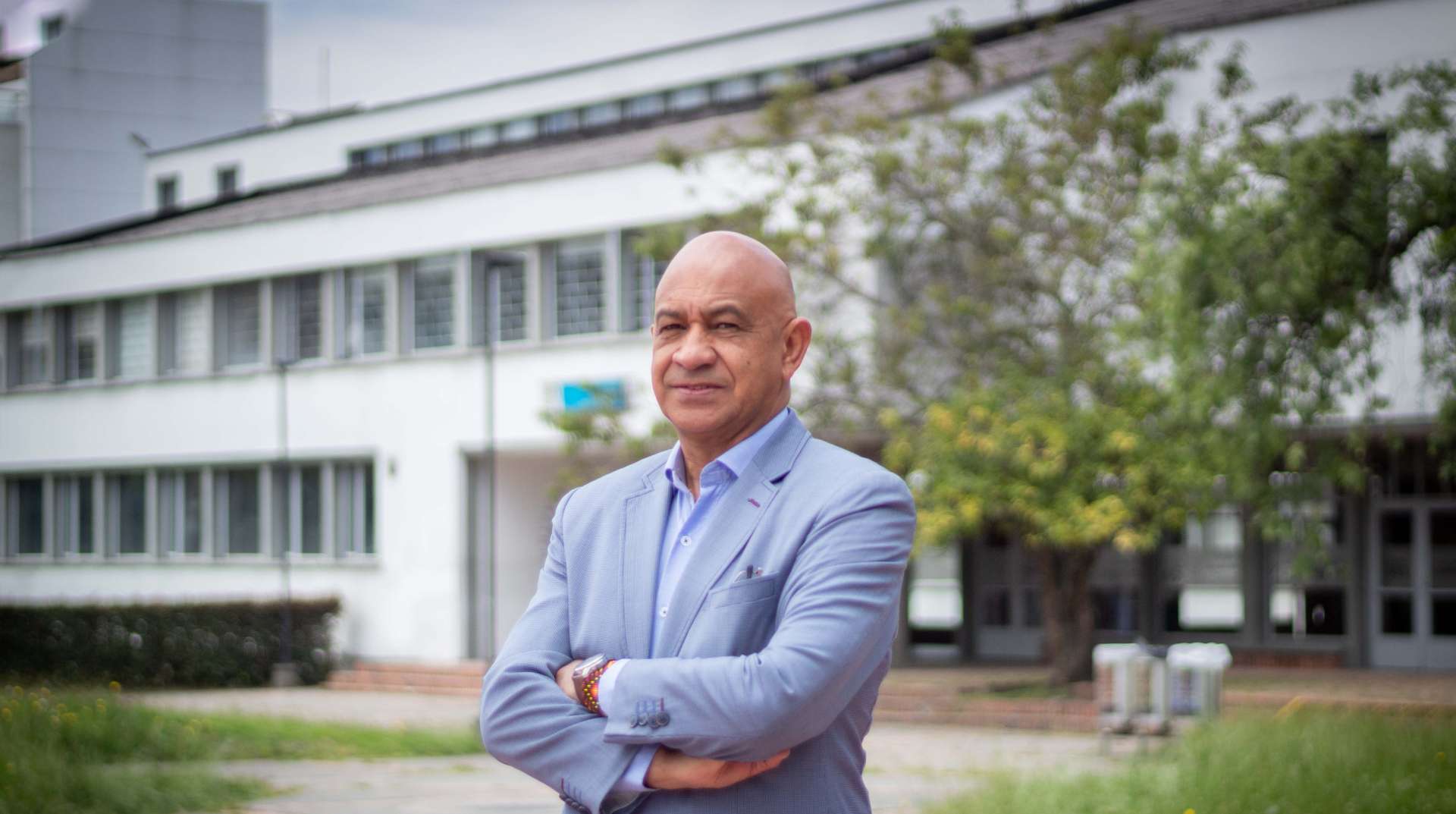
Omar Prias is an electrical engineer, professor at the National University of Colombia, and former president of the Colombian Energy and Gas Regulatory Commission (CREG). He has decades of experience in the energy sector working at the intersection between the academy, planning, and politics. This InterDialogue addresses the importance of decentralized energy technologies for sustainable development, the role of intercultural dialogue, national and global energy transition, and the possibilities of introducing advanced nuclear technologies, both new and projected, in non-nuclear countries such as Colombia. We begin by talking about the fundamental role of energy in all sectors of society. Timestamps 00:00 – Introduction 1:50 – Prias’s Background in Energy 7:57 – Industry and Energy Systems in Colombia 15:13 – Historical Development of the Energy Sector in Colombia; Energy and Conflict 22:06 – Geopolitics of Colombian Energy 26:32 – Hydroelectric Power in Colombia 44:40 – Intercultural Considerations and Energy Communities 53:15 – Intercultural Dialogue and Decision-Making 1:03:43 – Energy Transition in Colombia 1:13:41 – Nuclear Energy in Colombia 1:20:11 – Opening Spaces for Adopting New Technologies
Omar
Omar Prias
January 29, 2026
Is self-organization the answer to the foundational question of why life exhibits such complexity? And can it also serve as a guiding framework for how best to save complex webs of biodiversity amid the onslaughts of the modern world? Self-organization exists throughout nature and socioeconomic structures. It refers to the spontaneous emergence of collective, complex order within a disordered system, due to localized interactions that follow simple rules, and occurring without external controls. While conceptually abstract, given that uncertainty lies at its core, the applications of self-organization are everywhere. Advancing our understanding of the non-linear processes within complex systems that drive self-organization is also becoming increasingly important for developing evidence-based policies in a world defined by interdependence and escalating stressors. Indigenous cultures, such as those that live within complex socio-ecological systems in the Amazon ecoregion, have long embraced these principles of uncertainty, interconnectedness, and non-linear dynamics. How will their wisdom, experience, and models of socio-ecological systems integrate with evidence-based policies for protecting the Amazon ecoregion? Safeguarding the Amazon is one of our world’s most pressing, complex, and vital global challenges. Among the strategies gaining traction, supported by increasing financial investment, is the intriguing proposition to transform a portion of the region’s immense biodiversity into a sustainable “bioeconomy.” However, these proposals, and the policy makers responsible for negotiating their implementation across boundaries and cultures, often lack an understanding of how both economies and ecologies self-organize and scale. Data-driven models of self-organization and critical collective phenomena in the natural world and within traditional Indigenous sociocultural structures, along with adaptive context-based frameworks, can help guide the transboundary development of a decentralized and circular socio-bioeconomy for the Amazon. Self-Organized Criticality and the Edge of Chaos Pioneering research on self-organized criticality (SOC) began in the 1980s and was made accessible to a wider audience by...
DSC07445
Daniel Henryk Rasolt
January 23, 2026
Mariana Gómez Soto is a Colombian social anthropologist, environmentalist, and activist. She holds a BA in social anthropology with minors in geography and biology, a master’s degree in social anthropology, and a second master’s degree in holistic sciences from Schumacher College. Gómez has worked closely with Indigenous communities for many years and has led key intercultural initiatives through her roles at the Gaia Amazonas Foundation and as a leader within the North Amazon Alliance. She is the lead author of a recent chapter on socio-bioeconomics and connectivity published in an assessment report by the Science Panel for the Amazon. Gómez also played a central role in founding the Amazonia Conectada coalition, which brings together the North Amazon Alliance, the Science Panel for the Amazon, RAISG, and Aguas Amazónicas—organizations with distinct areas of expertise united by a shared commitment to sustaining the Amazon’s terrestrial, biocultural, hydrological, and climatic interconnectivity. This wide-ranging InterDialogue opens with a discussion on dynamic, context-based frameworks for building and scaling a sustainable, circular bioeconomy in the Amazon. The conversation then turns to the importance of Amazonian connectivity, the evolving priorities of the North Amazon Alliance and Amazonia Conectada, and the critical role of interdisciplinary and intercultural education and collaboration in safeguarding the region’s future. Timestamps 0:00 – Introduction 1:42 – Defining Bioeconomics and Socio-Bioeconomy 5:44 – Envisioning a Circular Bioeconomy in the Amazon 9:52 – Developing Socio-Bioeconomic Trade Infrastructure 12:09 – Challenges of Modeling Bioeconomy in Practice 14:45 – Consequences of 2026 Elections for the Amazon 16:10 – Bioeconomic Product Identification and Market Integration 22:47 – Experiences Coordinating the North Amazon Alliance 24:27 – Analyzing Connectivity in the Amazon 31:47 – Hydrological-Terrestrial Interconnectivity 34:24 – Developing a New Methodology for Measuring Forest Connectivity 37:26 – Coordinating with Policymakers and the Public 44:11 – Experiences at COP30 49:49...
mgomez
Mariana Gómez Soto
June 7, 2025
In a complex and rapidly evolving technological, socio-economic and geopolitical landscape that is focused on a global “sustainable energy transition,” increased electromobility based on lithium batteries is often stated as a key objective. However, unbeknownst to the public, policy makers and most researchers alike, lithium in its enriched isotopic forms (6Li and 7Li) holds tremendous added value beyond its use in batteries. This is especially true in both present and future nuclear technologies. For those countries with large lithium reserves that are being prospected for rapid lithium exploitation in order to fuel the growing global electromobility sector, it is important to be aware of these added value uses when considering plans for expanding lithium extraction (plans that also hold negative environmental externalities, such as prodigious water use and contamination). Argentina – which has an established nuclear energy and research sector, as well as a current administration that seems committed to rapidly depleting the national lithium reserves – serves as a strong and dynamic case study for the importance of crafting long-term, science-based and sustainable policies around the exploitation and isotopic separation of lithium. Argentina owns almost a third of the lithium reserves in South America which, together with those of Chile and Bolivia, represent more than half of the world’s lithium availability. Battery-grade lithium carbonate (Li2CO3) is produced from the Puna brines in the Andes of Northwestern Argentina – it is exported and only a small fraction remains in Argentina as royalties (around 3%) and the declared profits of the mining companies.  This article analyzes the use of lithium isotopes (6Li and 7Li) in fission and fusion nuclear reactors and in nuclear technology devices, such as scintillation plates, neutron detectors and shields. These uses of lithium in nuclear technologies have the potential to add value to Argentina’s limited lithium reserves...
corti
Horacio Corti
Contributors
Explore The InterPlex: Where Minds Unite, Worlds Connect!

Dive into a realm of interdisciplinary exploration. Join our community, break boundaries, and shape the future. Ready to connect?

Login

Sign up to get The InterPlex newsletter

Update Password

Update Password *
Confirm New Password *