Interdisciplinarity and Research Networks

June 17, 2026
Javier Buldú is a Spanish physicist and complexity scientist whose research spans complex networks, nonlinear dynamics, neuroscience, and sports analytics. He leads the Complex Systems Group at the King Juan Carlos University in Madrid and has held research positions at institutions including the Spanish Astrobiology Center and the University of Oxford. Buldú has also played a prominent role in building the international complex systems community through initiatives such as the Latin American Conference on Complex Networks (LANET), the Interdisciplinary Group of Complex Systems in Madrid, and the Sicómoro Foundation–URJC Chair in Complex Systems. In this InterDialogue, we trace Buldú’s intellectual journey from his early work on chaos, synchronization, and laser-based communication systems to his pioneering contributions to network science. We discuss his research on general complex networks, functional brain networks, Alzheimer’s disease, and the emerging field of “networks of networks,” exploring how competing and cooperating systems can be modeled across scales ranging from neuroscience to economics and international relations. We then turn to Buldú’s influential work applying complexity science to football, examining how advances in data collection, tracking technologies, and artificial intelligence are transforming both sports analytics and network research more broadly. He explains how professional sports provide an unprecedented laboratory for studying collective behavior and spatial networks, and how insights derived from sports data may ultimately inform the study of many other complex systems. We also discuss science communication, the future of complexity science, the development of network science in Latin America, and the opportunities and challenges posed by AI in scientific research. Finally, Buldú reflects on the personal side of scientific life, including his passion for long-distance motorcycle travel and the role it plays in maintaining balance and perspective. Timestamps 0:00 – Introduction 2:42 – From laser chaos to network science 6:29 – Brain networks, synchronization, and Alzheimer’s...
bulduHSCut
Javier Buldú
June 3, 2026
Ciro Cattuto is an Italian physicist and complexity scientist whose work explores the intricate relationships between human behavior and digital technologies. Since 2008, he has served as Scientific Director of the ISI Foundation, based in Turin, Italy. He is also the founder and principal investigator of the Sociopatterns Collaboration. Throughout his career, Cattuto has held a range of influential research, fellowship, advisory, and board positions in Italy, the United States, and Japan. In this thought-provoking InterDialogue, we trace Cattuto’s intellectual journey from theoretical solid-state physics into complex systems science, a multicultural path that unfolded across three continents. We also discuss his contributions to data science and complex network research, including his work on some of the first digital social networks. We then examine what it means to conduct interdisciplinary research and how such collaborations can be cultivated more effectively. Cattuto also draws on his experience at the intersection of complex networks and epidemiology as a case of interdisciplinary bridge-building in practice. We further discuss the research priorities and guiding principles of the ISI Foundation, especially in relation to its current focus on computational social science and opportunities for policy impact. Finally, we reflect on both the promise and the profound challenges associated with the growing integration of artificial intelligence into scientific research and society more broadly. Timestamps 1:41 – Cattuto’s background and trajectory in complex systems science 9:19 – ISI as a hub of European complex systems science 11:46 – Interdisciplinary collaborations at ISI 14:38 – Interdisciplinarity and institutional funding frameworks 16:52 – Interdisciplinarity across generational, disciplinary, and national boundaries 19:36 – Computational social science and other interdisciplinary research areas at ISI 24:06 – Translating research into policy and governance 25:26 – Social science contributions to AI and computational research 27:36 – Studying complex systems using AI 29:59 – Challenges...
cattuto_photo_square-2
Ciro Cattuto
May 21, 2026
Jaishri Sanwal Bhatt is an Indian geologist and paleoclimatologist based at the Jawaharlal Nehru Centre for Advanced Scientific Research in Bangalore, where she combines scientific research with a strong commitment to public outreach, advocacy, and science communication. For more than twenty years, Sanwal’s work has centered on reconstructing past climate change and active tectonic processes through the study of cave records and other geological proxies, especially paleolakes and speleothems. Her research has spanned the Indian and Nepalese Himalayas, the Andaman Islands, and both the eastern and western coasts of India, engaging major questions related to earth systems, water security, and natural hazards. In this wide-ranging and engaging InterDialogue, we discuss deep geological time, the proposed nuclear energy transition in India, the value of interdisciplinarity and clearer scientific communication, Sanwal’s efforts to organize science outreach initiatives in rural India, and much more. Timestamps 2:22 – Sanwal’s background and introduction to geology 8:43 – Big History and the evolution of the Earth through geology 14:25 – Sanwal’s research 16:45 – Tracking historical precipitation patterns through sediment 21:10 – Connecting paleoclimatology to contemporary climate science 25:53 – Tracking and analyzing extreme events through rocks 29:07 – Comparing chronological dating systems 32:52 – Sanwal’s work with lake cores 37:34 – Tracking tsunami episodes in the Andamans 44:09 – Evidence of tsunamis in mangrove forests 49:00 – Local knowledge and community collaborations 52:32 – Nuclear energy transition in India and waste disposal 57:18 – Risks of geological repositories for nuclear waste 1:00:16 – Sanwal’s rural science outreach and education initiatives
Jai
Jaishri Sanwal Bhatt
May 4, 2026
Ram Ramaswamy is an Indian physicist whose work cuts across disciplinary boundaries. A leading complex systems scientist, his research has largely centered on nonlinear dynamics, statistical physics, and computational biology. After earning his PhD from Princeton University, he returned to India, first joining the Tata Institute of Fundamental Research before spending most of his career at Jawaharlal Nehru University, where he was part of both the School of Physical Sciences and the School of Computational and Integrative Sciences until his retirement in 2018. He later served as Vice Chancellor of the University of Hyderabad and has held numerous visiting and honorary professorships. Currently, he is an honorary professor in the Department of Physical Sciences at IISER Berhampur and holds the D. D. Kosambi Chair in Interdisciplinary Studies at the University of Goa. Ramaswamy is a fellow of the World Academy of Sciences and a fellow and former president of the Indian Academy of Sciences, where he also founded the journal Dialogue: Science, Scientists and Society. Across his career, he has consistently championed academic freedom and more inclusive, equitable approaches to science education. In this wide-ranging InterDialogue, we discuss Ramaswamy’s contributions to chaos theory, self-organized criticality, and the synchronization of stochastic systems, along with his influential role in shaping nonlinear science in India. The conversation also explores the broader social responsibilities of scientists, particularly within public universities, including teaching, mentorship, and public communication. We delve into his sustained efforts to advance gender equity in Indian science, beginning with Lilavati’s Daughters, a landmark volume he co-edited featuring the voices of nearly one hundred women scientists. Other topics include improving accessibility in science education for students with disabilities and his current work on a biography of the influential Indian thinker D. D. Kosambi. The discussion opens with reflections on the importance of public...
ram-ramaswamy-clipped
Ram Ramaswamy
April 24, 2026
Sunil Mukhi is an Indian theoretical physicist at the Indian Institute of Science Education and Research (IISER) in Pune, Maharashtra. Mukhi has led a distinguished career in theoretical particle physics. He received his PhD from Stony Brook University before joining the prestigious Tata Institute of Fundamental Research in Mumbai, where he worked for 27 years. In 2012, he joined IISER Pune as chair of the physics department, where he is now an honorary emeritus professor and the Raja Ramanna Chair. Throughout the years, Mukhi has held sabbatical positions at CERN in Geneva, the Institute for Advanced Study at Princeton University, and Trinity College at the University of Cambridge. He is a fellow of the Indian Academy of Sciences, the Indian National Science Academy, and the World Academy of Sciences. In 1999, he received the Shanti Swarup Bhatnagar Prize, one of India’s highest science awards, for his contributions to theoretical physics. In this InterDialogue, we begin by speaking about Mukhi’s advisory work on academic ethics, the structural incentives for academic misconduct, his concerns about AI use in academia and the difficulties of curtailing it, and India’s international scientific standing. We then speak about Mukhi’s research and contributions to theoretical physics, especially in the field of string theory. Mukhi also discusses his personal background, his career trajectory, and his reasons for returning to India after studying in the United States. We conclude by addressing the importance of science outreach, inclusivity in science, responsible behavior in scientific and public discourse, and the importance of extracurricular interests to maintaining a healthy work-life balance. Timestamps 00:00 – Introduction 2:27 – Importance of academic ethics 5:59 – Consequences of academic misconduct 8:24 – Structural incentives for academic misconduct 11:23 – Legal challenges in academic ethics 13:14 – AI and academic ethics 16:46 – Addressing AI use...
Mukhi
Sunil Mukhi
March 24, 2026
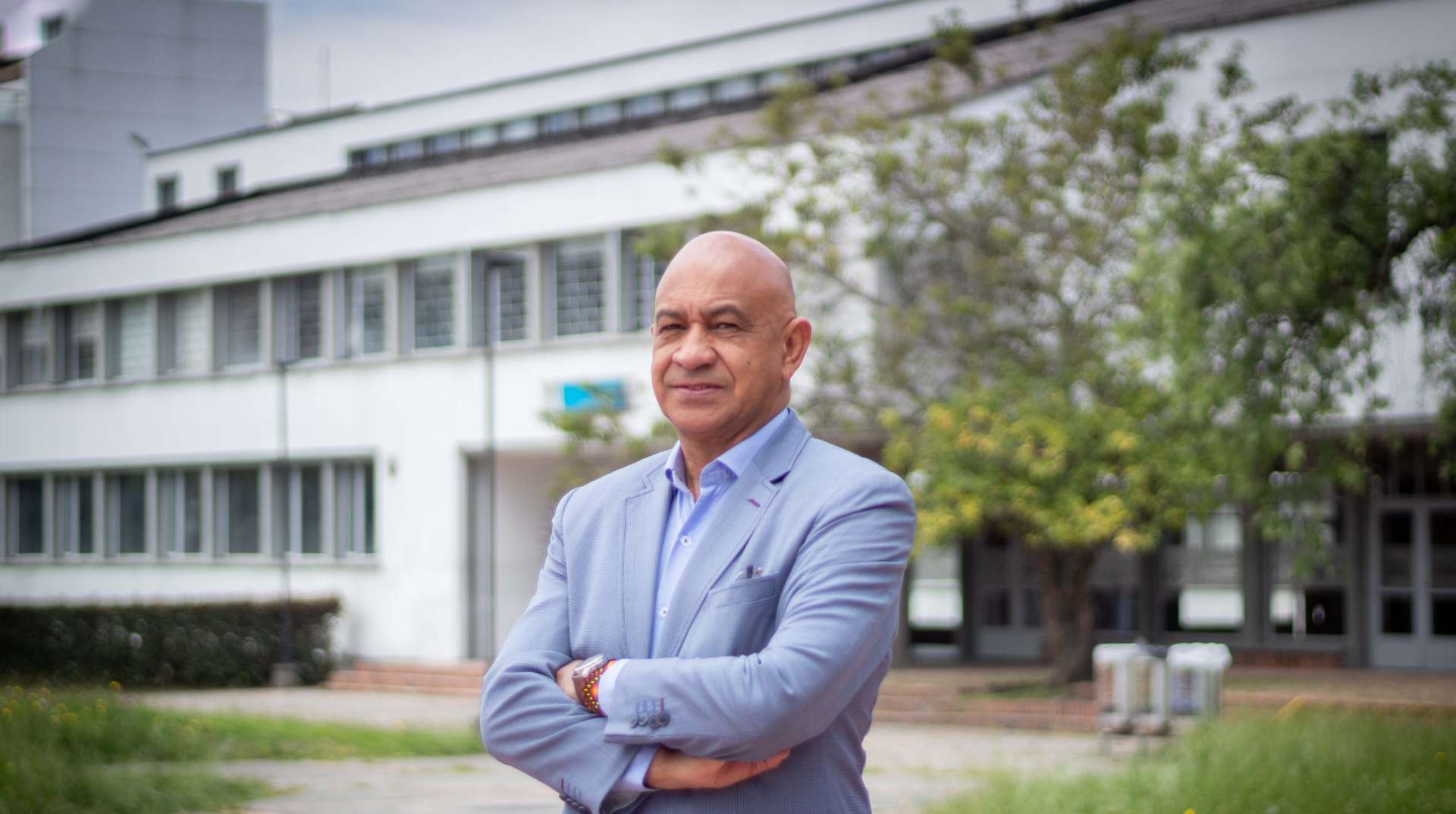
Omar Prias is an electrical engineer, professor at the National University of Colombia, and former president of the Colombian Energy and Gas Regulatory Commission (CREG). He has decades of experience in the energy sector working at the intersection between the academy, planning, and politics. This InterDialogue addresses the importance of decentralized energy technologies for sustainable development, the role of intercultural dialogue, national and global energy transition, and the possibilities of introducing advanced nuclear technologies, both new and projected, in non-nuclear countries such as Colombia. We begin by talking about the fundamental role of energy in all sectors of society. Timestamps 00:00 – Introduction 1:50 – Prias’s Background in Energy 7:57 – Industry and Energy Systems in Colombia 15:13 – Historical Development of the Energy Sector in Colombia; Energy and Conflict 22:06 – Geopolitics of Colombian Energy 26:32 – Hydroelectric Power in Colombia 44:40 – Intercultural Considerations and Energy Communities 53:15 – Intercultural Dialogue and Decision-Making 1:03:43 – Energy Transition in Colombia 1:13:41 – Nuclear Energy in Colombia 1:20:11 – Opening Spaces for Adopting New Technologies
Omar
Omar Prias
Explore The InterPlex: Where Minds Unite, Worlds Connect!

Dive into a realm of interdisciplinary exploration. Join our community, break boundaries, and shape the future. Ready to connect?

Login

Sign up to get The InterPlex newsletter

Update Password

Update Password *
Confirm New Password *